
Spatial Reframing
Are we altering memories for the perfect shot?
I should start by saying I’m a big fan of Apple and its product ecosystem. Full disclosure, I worked for Apple for 5 years, during the launch of Siri, Apple Watch and iPad Pro, to name just some products.
I’ve always been intrigued by Apple’s ability to not necessarily be the first to market, but be the most ‘considered’ to market, or at least appear to be. For example, they aren’t the first company to release an AI assistant (not by a long shot; I won’t get into the delayed Apple Intelligence); however, Apple’s commitment to on-device processing and stringent privacy standards is the primary reason for the slower AI development compared to competitors leveraging massive cloud data.
Apple recently unveiled their latest mobile operating system, iOS 27 and with it a punnet of new AI features, including Spatial Reframing.
“With Spatial Reframing, users can improve the composition of a photo after it’s been taken. Users can touch and drag a photo and preview in real time how the perspective shifts — as if they’d repositioned the camera in the original scene. Spatial Reframing will only generate new content where the perspective has been shifted, ensuring the reframed photo stays consistent with the original scene.”

When I first saw this feature, it blew me away. The number of times I’ve snapped a family holiday picture and then, when reviewing days later, thought “ah, I wish I’d framed it like this”- well, now I can, thanks to Spatial Reframing.
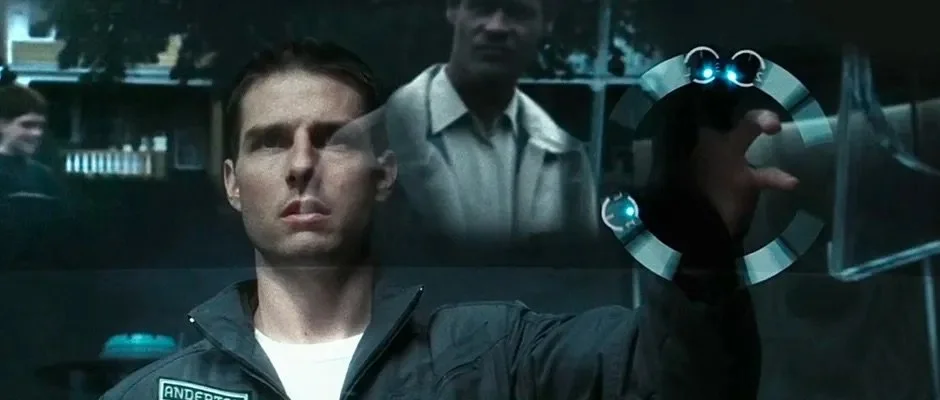
It all looks very ‘Minority Report’, but altering memories rather than the future, which brings me to the point of this article. If photos can be manipulated to this degree, are we altering memories for the perfect shot?
I had a discussion with our head of creative, James Halsall, who told me that as soon as he edits a family picture, it doesn’t feel ‘genuine’ anymore and is almost tarnished in some way. Even if it’s just removing an unsightly bin from the background of a shot, it changes our relationship with the image and potentially our memory of that event.
Not to go too psychological TED Talk on you, but there’s an interesting article by National Geographic that explores how taking an overwhelming number of digital photos on smartphones is actively reshaping, and sometimes impairing, how human memory functions. Instead of simply acting as a passive record of our lives, the act of constantly capturing, storing, and curating photos alters our cognitive engagement with the present moment.
Here are some key points for you TLDR-ers:
The "Photo-Taking Impairment" Effect: Documented by cognitive psychologist Linda Henkel, researchers found that focusing heavily on capturing a photo (like adjusting angles during a long concert video) reduces emotional engagement and harms the organic memory of the event. The brain essentially "offloads" the memory task onto the device, relying on the camera to remember for it.
Photos as Two-Sided Cues: When used intentionally—such as taking a quick snapshot of a favourite song or actively interacting with the subject—photos act as powerful cues that help jog details and emotions. However, because people rarely go back to organise or review their massive digital archives, they lose this benefit and suffer from "digital overload."
Active Memory Construction: Remembering in the digital age is no longer purely internal. Memory is heavily reconstructive, and our photo habits dictate how we shape our personal narratives. Sharing photos on social media reinforces memories, while a 2023 study by Julia Soares revealed that intentionally deleting photos causes people to remember those specific experiences far less vividly.
Rewriting Personal History: Psychologists warn that over-photographing certain events while leaving others undocumented creates artificial "hills and valleys" in our autobiographies. Our brains begin to remember the photo itself rather than the authentic, multi-sensory reality of what actually occurred.
So, will this feature make people take even more pictures, with less consideration for the moment as they know they can always reframe it afterwards? Removing a bin from the background of a picture is one thing, but is changing the angle/shot of the photo after the fact going too far?
All that being said, if I put my FullComms hat on, this is a fantastic tool for us as a creative agency, which we’ll be able to use to reframe the perfect shot for a social media post, website header, digital ad, etc.
Will you be using the new Spatial Reframing feature, or will you reject the ever-increasing AI technology that’s in our lives and be a photography purist?
